

✔ 100% Authentic Product
👁️ Currently Viewing 24
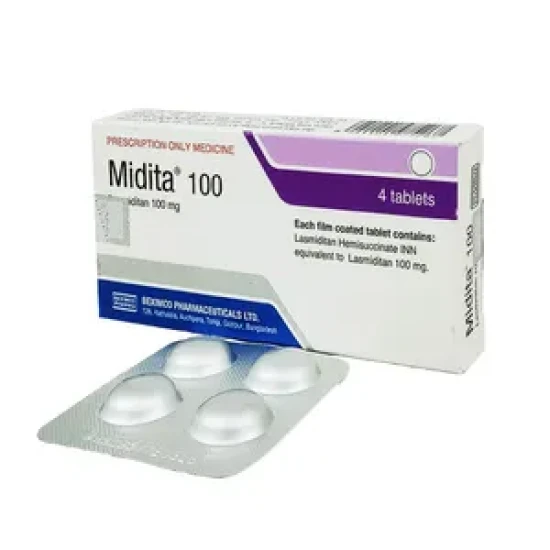
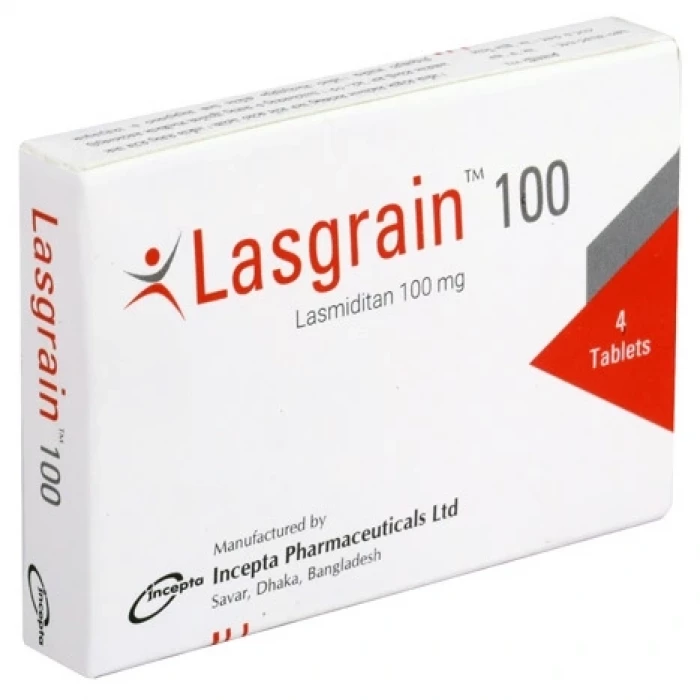
Lasmiditan Hemisuccinate | A medication used for fast relief of migraine headaches.
Pediatric Use: Safety and effectiveness in children have not been established
Hepatic Impairment:
Mild to moderate impairment (Child-Pugh A or B): No dose adjustment required
Severe impairment (Child-Pugh C): Use is not recommended
Discount
Price: ৳ 293
MRP:
৳
308
5%
Off

100% Genuine Products, Guaranteed

Safe & Secure Payments, Always

Fast, Secure & Efficient Delivery

Proper Packaging
 Cash on Delivery - All over Bangladesh
 Regular Delivery - 12-24 Hours, Dhaka City* Charge Tk.39-59
- Regular Delivery - 24-48 Hours, Other Cities* Charge Tk.99-110
 ফ্রি ডেলিভারিঃ - ৯৯৯ টাকা+ অর্ডারে, ঢাকা
শহরে
ফ্রি ডেলিভারিঃ - ৯৯৯ টাকা+ অর্ডারে, ঢাকা
শহরে- ফ্রি ডেলিভারিঃ - ২৯৯৯ টাকা+ অর্ডারে, ঢাকার
বাহিরে
100% Genuine Products, Guaranteed
Safe & Secure Payments, Always
Fast, Secure & Efficient Delivery
Proper Packaging
- Cash on Delivery - All over Bangladesh
- Regular Delivery - 12-24 Hours, Dhaka City* Charge Tk.39-59
- Regular Delivery - 24-48 Hours, Other Cities* Charge Tk.99-110
- ফ্রি ডেলিভারিঃ - ৯৯৯ টাকা+ অর্ডারে, ঢাকা
শহরে
- ফ্রি ডেলিভারিঃ - ২৯৯৯ টাকা+ অর্ডারে, ঢাকার
বাহিরে
✅ Description:
Lasmiditan represents a novel class of acute anti-migraine therapy that works by modulating neuronal activity rather than causing cerebral vasoconstriction. This mechanism differentiates it from traditional migraine treatments such as triptans. Lasmiditan demonstrates a rapid onset of action, with some patients experiencing symptom relief as early as 20 minutes after administration, making it particularly valuable for acute migraine management.
Because Lasmiditan can cause central nervous system (CNS) effects, including dizziness and drowsiness, it may significantly impair activities that require mental alertness. Patients should therefore be advised to avoid driving or operating machinery for at least 8 hours after taking a dose.
Lasmiditan may also carry a potential risk for misuse, and caution is advised when prescribing it to individuals with a history of substance abuse. Its classification as a controlled substance is currently under evaluation by the U.S. Drug Enforcement Administration (DEA).
The safety of Lasmiditan during pregnancy has not been established. Ongoing monitoring is being conducted through a pregnancy exposure registry established by Eli Lilly and Company to evaluate potential risks to fetal development.
Historically, acute migraine treatment focused on constricting dilated cerebral blood vessels, based on the belief that vascular dilation was the primary cause of migraine pain. However, the neurogenic hypothesis of migraine proposes that abnormal activation of trigeminal nerve pathways plays a central role in migraine pathophysiology, with vasodilation occurring as a secondary effect.
Although the exact mechanism of action of Lasmiditan is not fully defined, it is believed to exert its therapeutic effect through selective and potent agonism of the 5-HT₁F (serotonin) receptor. These receptors are located in both the central and peripheral nervous systems, particularly on trigeminal neurons. Activation of 5-HT₁F receptors leads to hyperpolarization of nerve terminals and suppression of trigeminal neuronal firing, thereby reducing migraine-related pain signals without inducing vasoconstriction.
Previously, migraine pain was thought to result primarily from the dilation of cerebral blood vessels. However, the neurogenic theory of migraine suggests that abnormal activation of trigeminal nerve pathways is the main cause of migraine pain, while vasodilation is a secondary effect.
Although the exact mechanism of action of Lasmiditan is not fully understood, it is believed to work by selectively activating 5-HT (serotonin) receptors located in both the central and peripheral nervous system, particularly on trigeminal neurons. Activation of these receptors leads to hyperpolarization of nerve terminals and inhibition of trigeminal nerve firing, thereby reducing migraine pain.
Lasmiditan has minimal affinity for other serotonin receptor subtypes and does not significantly interact with adrenergic or dopaminergic receptors.

Relevant Products / প্রাসঙ্গিক পণ্য







✔️ Uses of Midita | Lasmiditan Hemisuccinate
Midita is indicated for the acute treatment of migraine attacks with or without aura in adults.
It is not intended for the prevention of migraine.
✔️ Dosage & Administration of Lasmiditan Hemisuccinate
Recommended dose: 50 mg, 100 mg, or 200 mg taken orally as needed
Maximum dose: One dose in 24 hours
A second dose for the same migraine attack is not effective
Safety of treating more than 4 migraine attacks per month has not been established
May be taken with or without food
Patients must be able to wait at least 8 hours before driving or operating machinery after taking Midita
✔️ Side Effect | Lasmiditan
The most commonly reported side effects include:
Dizziness
Fatigue
Paresthesia (tingling sensation)
Sedation
✔️ Drug Interaction | Lasmiditan
CNS Depressants:
Use with caution when taken with alcohol or other CNS depressants due to the risk of sedation and cognitive impairment.
Serotonergic Drugs:
Concomitant use with SSRIs, SNRIs, TCAs, MAO inhibitors, trazodone, dextromethorphan, or herbal supplements like St. John’s Wort may increase the risk of serotonin syndrome.
Heart Rate–Lowering Drugs:
Midita may reduce heart rate. When used with medications such as propranolol, additional heart rate reduction may occur. Use caution if significant bradycardia is a concern.
P-gp and BCRP Substrates:
Midita inhibits P-gp and BCRP transporters; therefore, concomitant use with drugs that are substrates of these transporters should be avoided.
✔️ Pregnancy & Lactation | Lasmiditan
Pregnancy:
There are no adequate data on the use of Lasmiditan in pregnant women. Animal studies have shown developmental toxicity at certain exposure levels. Use only if clearly needed.
Lactation:
There is no information on Lasmiditan in human breast milk. Animal studies indicate that Lasmiditan and/or its metabolites are excreted into milk at higher concentrations than in maternal plasma. Caution is advised.
✔️ Precautions & Warnings | Lasmiditan
Driving Impairment: Patients should not drive or operate machinery for at least 8 hours after taking Midita
CNS Depression: Use cautiously with alcohol or other CNS depressants
Serotonin Syndrome: Discontinue Midita if symptoms occur
Medication Overuse Headache: Detoxification may be required in some cases
✔️ Storage Conditions
Store below 30°C, protected from light and moisture.
Keep out of reach of children.
⚠️Disclaimer:
At ePharma, we’re committed to providing accurate and accessible health information. However, all content is intended for informational purposes only and should not replace medical advice from a qualified physician. Please consult your healthcare provider for personalized guidance. We aim to support, not substitute, the doctor-patient relationship.